Adjustable Over-Sink Silicone Drying Rack Guide
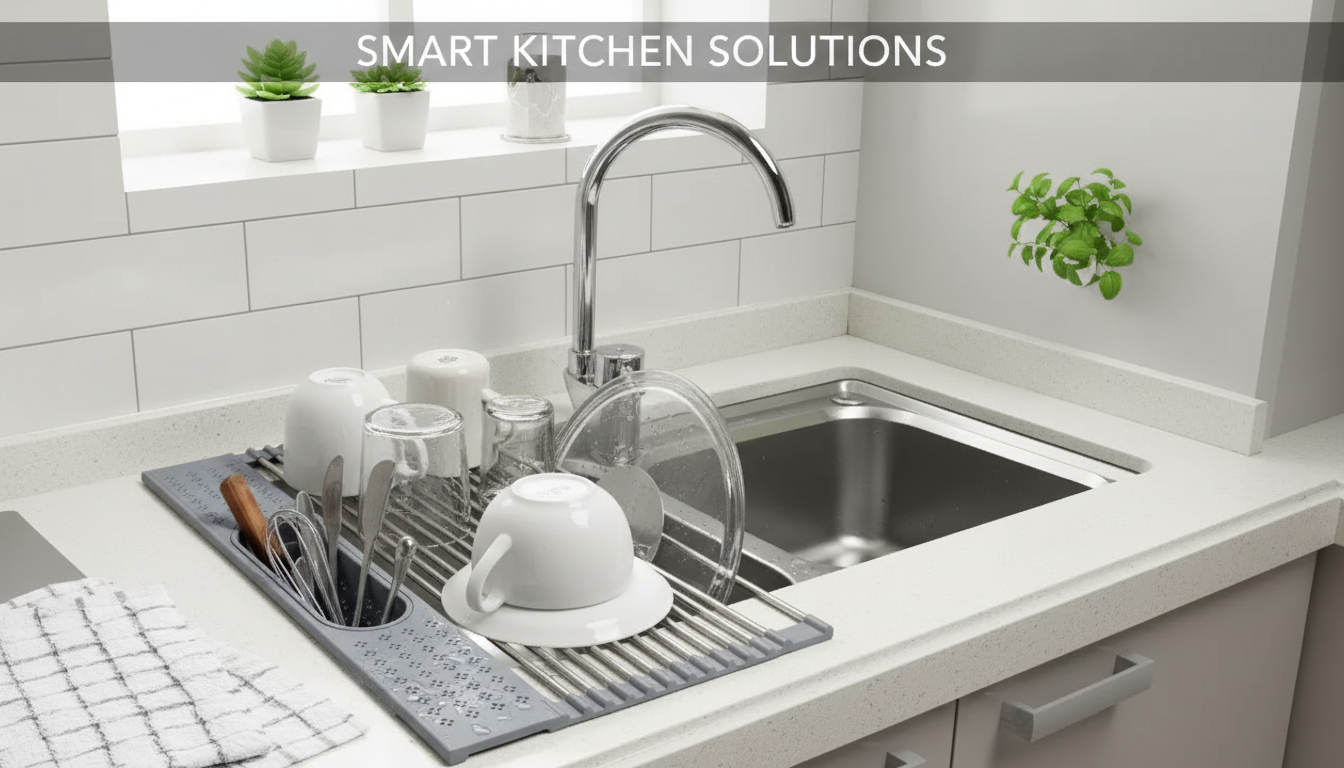
Multi-Use Adjustable Silicone Over Sink Drying Rack: A Space-Saving Upgrade for Busy Kitchens
A flexible over-sink drying rack can free up counter space, speed up drying, and add a safe landing spot for wet dishes, produce, and cookware. Unlike bulky countertop racks that need a tray, an over-sink design lets water drip straight into the basin—keeping your counters clearer and cleanup faster. Below is a practical guide to how an adjustable silicone rack works, what to measure before buying, everyday ways to use it, and simple care habits that help it stay grippy and fresh.
What It Does (and Why It’s Useful)
An over-sink roll-up rack creates an elevated, temporary surface that lives right where the water is—over your sink—so you can rinse, drain, dry, and stage items without sacrificing prep space.
- Creates an elevated drying surface over the sink so water drips directly into the basin instead of pooling on the counter.
- Adds temporary workspace for rinsing produce, resting warm cookware, or staging hand-washed items.
- Roll-up, low-profile design stores easily in a drawer or cabinet when not in use.
- Helps reduce clutter around the faucet area by consolidating drying and prep tasks.
If you want a simple, sink-spanning solution, see the Multi-Use Adjustable Silicone Over Sink Drying Rack.
Design Highlights to Look For
Not all sink racks feel the same in daily use. Small design details affect stability, comfort, and how confidently you can place heavier cookware on top.
- Adjustable length: accommodates different sink widths and allows quick repositioning.
- Silicone-coated contact points: improves grip on sink edges and helps prevent sliding.
- Heat resistance: useful as a trivet for warm cookware (verify the product’s stated temperature tolerance).
- Weight capacity and bar spacing: closer spacing supports smaller items; sturdier cores support heavier cookware.
- Non-slip stability: rubberized ends or silicone rails that stay planted even with vibration from running water.
Measuring for the Right Fit
Fit is the make-or-break factor. A rack that’s slightly too short can shift when you set down a cutting board, while an overextended rack may feel springy or unstable. Measure once, buy with confidence.
Quick Fit Checklist
| Measurement | How to measure | Why it matters |
|---|---|---|
| Sink rim width | Rim edge to rim edge across the top | Ensures the rack can span securely |
| Fixture clearance | Distance from rim to faucet base/handles | Prevents rocking or poor seating |
| Basin placement | Which bowl the rack will sit over | Avoids uneven support on split sinks |
| Storage space | Drawer/cabinet depth | Confirms it can be stored flat or rolled |
- Measure the outside width of the sink opening (rim to rim) where the rack will rest.
- Check faucet and handle clearance so the rack can sit flat without bumping fixtures.
- Consider sink configuration: single-bowl, double-bowl, and farmhouse/apron-front setups may place rims differently.
- If using over one basin in a double sink, measure that basin’s rim width specifically.
- Confirm the rack’s adjustable range covers the measured width with a little margin for stability.
Everyday Ways to Use It
A good over-sink rack earns its keep beyond dish drying. It’s one of those tools that quietly makes routines smoother—especially when counter space is limited.
- Dish drying: plates, cups, and cutlery (a utensil cup nearby can help keep forks and spoons corralled).
- Produce rinse station: spread fruits and vegetables for quick draining after washing.
- Cookware landing zone: rest rinsed pots, lids, and cutting boards to drip-dry without soaking a towel.
- Thawing or draining: place sealed foods or packages over the sink so drips don’t hit the counter.
- Cooling/trivet function: set warm cookware on top when counter space is limited (only if the heat rating allows).
For a compact tool that adapts to these tasks, consider the Multi-Use Adjustable Silicone Over Sink Drying Rack as a daily-use option.
Cleaning, Drying, and Odor Prevention
Because it sits near moisture, a rack benefits from quick, consistent care—especially if it comes into contact with food residue or greasy pans. Keeping it clean also helps maintain grip on the sink rim.
For general household cleaning guidance, the CDC outlines practical steps for routine cleaning and when disinfecting is appropriate: CDC — Clean and Disinfect: Everyday Steps and When to Disinfect.
Material and Kitchen Safety Notes
If you like to cross-check food-contact material references, this commonly cited regulation is a helpful starting point for elastomers used in repeated-use applications: FDA CFR 21 §177.2600.
How It Compares to Other Drying Options
| Option | Best for | Trade-offs |
|---|---|---|
| Over-sink roll-up rack | Small kitchens, quick drying, multi-use prep/drain tasks | Not ideal for very large dish loads |
| Countertop rack | High volume dish drying | Takes counter space; needs draining solution |
| Drying mat | Quick set-down drying | Can stay wet; needs frequent laundering |
| Dish towels | Occasional use, minimal gear | Less stable; can hold moisture and odors |
Setup Tips for a More Stable, Faster-Drying Routine
More In-Stock Picks to Round Out Your Home
FAQ
Will an over-sink drying rack fit any sink?
Fit depends on your sink’s rim-to-rim width and the rack’s adjustable range. Also check faucet/handle clearance and, for double sinks, measure the specific basin you plan to span so the rack sits evenly.
Can it be used as a trivet for hot pans?
Many silicone-coated racks are heat tolerant, but you should follow the product’s stated temperature rating. Place hot cookware evenly across the bars and keep it away from open flames or direct contact with heating elements.
How should it be cleaned to prevent odors?
Rinse after use, wash with mild soap, and scrub between the bars where residue can hide. Let it dry completely before storing, and do an occasional warm soapy soak to reset it if it starts smelling musty.










Leave a comment